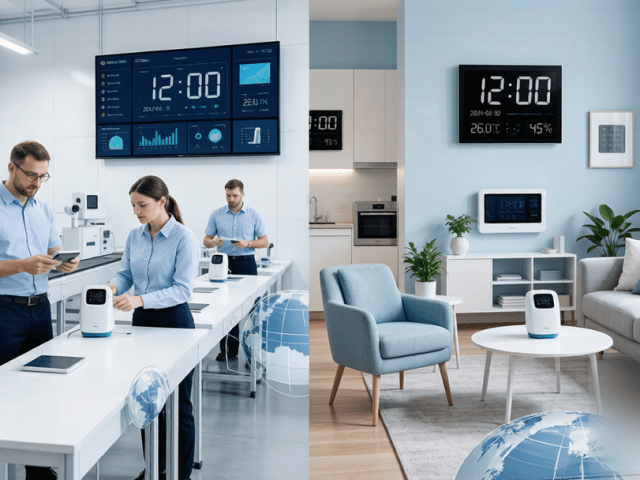
Timer Buyer’s Guide: How to Choose the Right One in 2026
Timer Buyer’s Guide: How to Choose the Right One in 2026
A kitchen timer seems simple until you actually need one that works. The best timer is easy to read across the room, loud enough to hear over a running oven fan, and shaped to live where you cook — on the fridge, the wall, or the counter. This timer buyer’s guide walks you through the main types available in 2026, the features that genuinely matter, and how to match a model to your kitchen, classroom, clinic, or retail shelf — so you can buy (or stock) with confidence instead of guessing from a product photo.
Why a Good Timer Still Earns Its Spot
Smartphones have timers, but they’re easy to miss, easy to silence, and tied to a device you’d rather not smear with flour. A dedicated digital timer puts a big, loud, single-purpose countdown where you need it and then gets out of the way. For homes, teaching kitchens, salons, labs, and care settings, that simplicity is the whole point.
- At-a-glance readability. Large, high-contrast digits you can read from across the room or with wet hands.
- Audible where it counts. A loud enough alarm to hear over a range hood, a mixer, or hallway chatter.
- No setup friction. Press, twist, or tap to set; no app, no account, no firmware update at dinner time.
- The right form factor. Magnetic, wall-mount, clip-on, or stand-up — the timer should sit exactly where the task happens.
- Better focus. A physical timer on the counter beats a phone that invites one more scroll mid-recipe.
For businesses, a reliable timer line is a steady, low-cost, gift- and back-to-school-friendly category with year-round demand.
Types of Timers
Not every timer is built the same. Sorting by type is the fastest way to narrow the field.
Digital Kitchen Timers
A digital kitchen timer with an LCD display is the everyday staple. The Kitchen Timer YT6738 is YOUTONG’s representative here: a clear digital readout, simple set buttons, and a compact body that works on a counter or sticks to the fridge. Best for anyone who wants “count down from 10 minutes” without menus.
Wall-Mount & Magnetic Timers
A wall mount timer or magnetic model lives where you look, not where you lose it. The Kitchen Timer YT6717 is built for wall or metal-surface mounting — ideal for teaching kitchens, commercial prep stations, salons, and labs where a fixed, always-visible countdown prevents overcooked batches and missed steps.
Table & Cooking Timers
A cooking timer that sits on the counter or a shelf is the flexible pick. The Cooking Timer YT6716 is the table model for home kitchens, break rooms, and classrooms — set it, leave it, and the loud alert finds you. Look for a stable base and a display you can read while both hands are busy.
Digital Countdown Timers (Multi-Use)
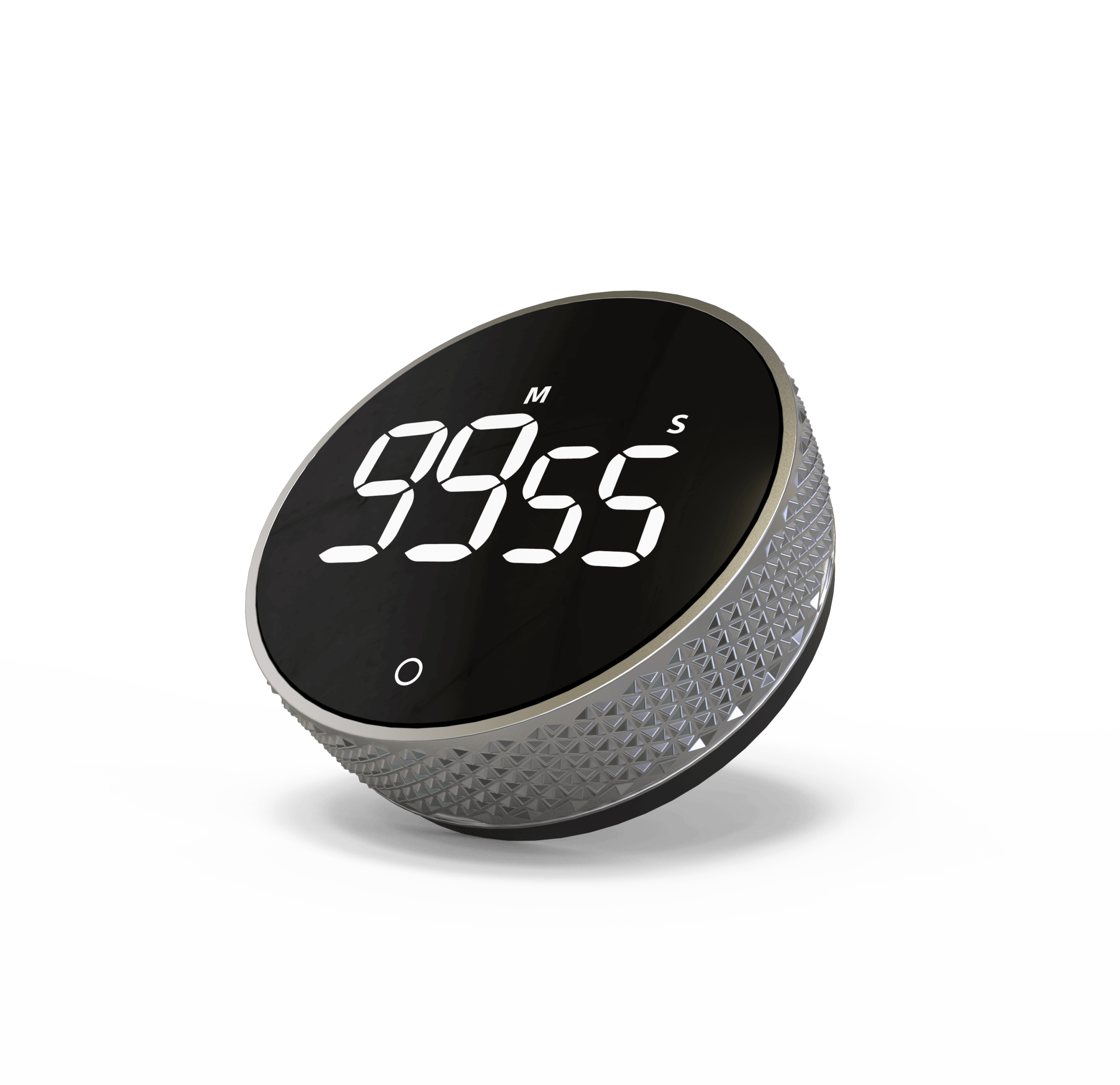
A countdown timer with a clear digital face does double duty well beyond the kitchen: study sessions, workout intervals, medication reminders, plant watering, even board-game turns. The Digital Timer YT6712 carries YOUTONG’s larger-format display for spaces where the number has to be seen from across the room.
What to Look for in a Timer
Specs can look intimidating, but only a handful genuinely change your experience.
Display: Size, Contrast, and Backlight
The single most-used feature is the screen. Choose large, high-contrast digits, and if the timer sits in a dim pantry or evening kitchen, a backlight or glow helps you check the remaining time without guessing.
Volume and Alert Style
A timer you can’t hear is useless. Check the alarm volume and whether it beeps, rings, or buzzes. For noisy environments (a running exhaust fan, a classroom), pick the loudest model you can find and confirm the alert repeats rather than chirping once and quitting.
Mounting: Magnetic, Wall, Clip, or Stand
Match the form factor to where the timer will actually live. Magnetic backs stick to the fridge or oven side; wall mounts free up counter space; clips attach to a pocket or apron; stands sit on a shelf. The right mount is why a timer gets used instead of ignored.
Power: Battery vs Rechargeable
Most kitchen timers run on a coin or AAA battery and last months. Rechargeable models cut battery waste but need a charging habit. For a gift or a bulk buy, simple disposable-battery units are the lowest-friction choice.
Count-Up vs Count-Down (and Memory)
A pure count-down timer covers most cooking. Some models also count up (handy for timing how long something already cooked) and remember the last setting so you can re-run it with one press. If you repeat the same intervals daily, memory is a quiet time-saver.
Extra Touches
A clock mode, a temperature readout (on combo units), or a dual-channel timer that runs two countdowns at once are the features buyers actually notice. None are essential, but each can justify a small premium.
YOUTONG Timer Models
YOUTONG has manufactured consumer electronics for over 24 years, with in-house R&D and dual production bases in Fujian, China and Vietnam. Our timer line is built for OEM and ODM partners who need reliable, certified, good-looking timers at scale. The current lineup includes:
- YT6738 — Digital Kitchen Timer. Compact LCD countdown timer with simple set buttons; the default pick for home and light-commercial kitchens.
- YT6717 — Wall-Mount Kitchen Timer. Fixed-mount design for teaching kitchens, prep stations, salons, and labs where a visible countdown matters.
- YT6716 — Cooking Timer (Table). Stable counter model with a readable display for home kitchens, break rooms, and classrooms.
- YT6712 — Digital Countdown Timer. Larger-format digital display for spaces that need the number seen from across the room.
Every model is engineered for a loud, reliable alert and broad compatibility, and the range scales from small batches to full production runs for global retailers. Facilities are ISO-certified, and products comply with CE / FCC / RoHS / REACH, with documentation provided per order. For samples, MOQ, or bulk pricing, contact us.
Matching a Timer to Your Scenario
- Home kitchen / meal prep: A digital kitchen timer (YT6738) on the fridge or counter.
- Teaching kitchen, salon, or lab: A wall-mount timer (YT6717) that stays visible and can’t walk off.
- Counter or shelf use: A table cooking timer (YT6716) with a stable base.
- Large room or group setting: A large-display digital timer (YT6712) seen from across the space.
- Gift or retail line: Compact digital timers (YT6738 / YT6712) sell well and bundle into kitchen sets.
How to Choose: A Quick Timer Checklist
Still deciding? Walk through this five-step checklist and the right model becomes obvious. It also answers the most common “how to choose a kitchen timer” questions in one glance:
| Step | Question to answer | If yes, consider |
|---|---|---|
| 1 | Will it sit on a fridge or oven side? | A magnetic digital kitchen timer (YT6738) |
| 2 | Does it need to be fixed and always visible? | A wall-mount timer (YT6717) |
| 3 | Will it live on a counter or shelf? | A table cooking timer (YT6716) |
| 4 | Must the number be read from far away? | A large-display digital timer (YT6712) |
| 5 | Do you repeat the same interval daily? | A timer with last-setting memory |
This simple flow turns a vague “best kitchen timer 2026” search into a confident purchase. Match your answers to the YOUTONG models above and you get a device that fits your real routine — not just a photo that looks good.
Common Timer Mistakes
- Buying a screen that’s too small. If the digits can’t be read from the stove, the timer fails its only job. Size the display to the room.
- Ignoring volume. A soft chirp under an extractor fan is a burnt dinner. Confirm the alarm is genuinely loud.
- Wrong mount for the space. A counter timer in a tiny galley kitchen wastes space; a non-magnetic timer on a steel fridge won’t stay put. Match form factor to location.
- Forgetting battery life. A timer that dies mid-roast is worse than none. Choose a model with long battery life and a low-battery indicator.
- Overpaying for features you won’t use. A clock mode or dual-channel timer is nice, but a loud, readable single countdown does 90% of the work for less.

Caring for Your Timer
Keep the display away from direct midday sun to slow any aging, and wipe it with a damp cloth rather than soaking it. For battery models, swap batteries on a schedule and watch for a low-battery indicator so an alert never fails you mid-task. With basic care, a quality timer keeps accurate count for years.
Final Thoughts
The right timer is the one that matches your real environment and your real questions. If you want a portable, stick-anywhere countdown, the Digital Kitchen Timer YT6738 is the clear winner. If you need a fixed, always-visible unit for a busy station, the Wall-Mount Kitchen Timer YT6717 earns its spot. And if you need the number seen from across a room, the Digital Countdown Timer YT6712 removes the guesswork.
YOUTONG’s dual-factory, in-house-R&D backbone — the same strength behind our Digital Clocks and Weather Stations lines — means our timers are built for consistent quality at any volume. Browse our range or contact us to discuss OEM/ODM specifications, MOQ, and lead times for your market.
More Buying Guides from YOUTONG
A timer rarely travels alone. If you are kitting out a home, classroom, or retail line, these related guides help you build a complete setup — and they are all built on the same OEM/ODM quality backbone:
- Digital Clocks — alarm, desk, wall, and temperature-reading models.
- Weather Stations — indoor/outdoor stations and forecasters for home and B2B buyers.
- Thermometer & Hygrometers — precision temperature and humidity instruments.
- Air Quality Monitors — PM2.5, CO₂, and humidity trackers for healthier rooms.
- DAB / FM Radios — portable and tabletop radios for every market.
Need OEM/ODM specs, MOQ, or bulk pricing across any category? Contact us.
Frequently Asked Questions
Q: Do digital kitchen timers need Wi-Fi or an app?
No. A digital kitchen timer runs on its own hardware with a built-in display and alarm. Wi-Fi is not required for the core countdown function.
Q: What is the difference between a mechanical and a digital timer?
A mechanical timer uses a spring and dial (no battery, but less precise and harder to read); a digital timer uses an LCD and a chip for exact countdowns, louder alerts, and often a memory of the last setting.
Q: How loud should a kitchen timer be?
Loud enough to hear over a range hood, mixer, or classroom. If the timer will sit in a noisy space, choose the loudest model available and confirm the alert repeats rather than chirping once.
Q: Can a kitchen timer be mounted on a fridge or wall?
Yes. Many digital kitchen timers have a magnetic back for steel surfaces, and wall-mount models (such as YT6717) fix permanently to a wall or prep station.
Q: Are these timers customizable for a private-label brand?
Yes. Manufacturers like YOUTONG offer OEM/ODM for appearance, labeling, and packaging, so retailers can sell them under their own brand.